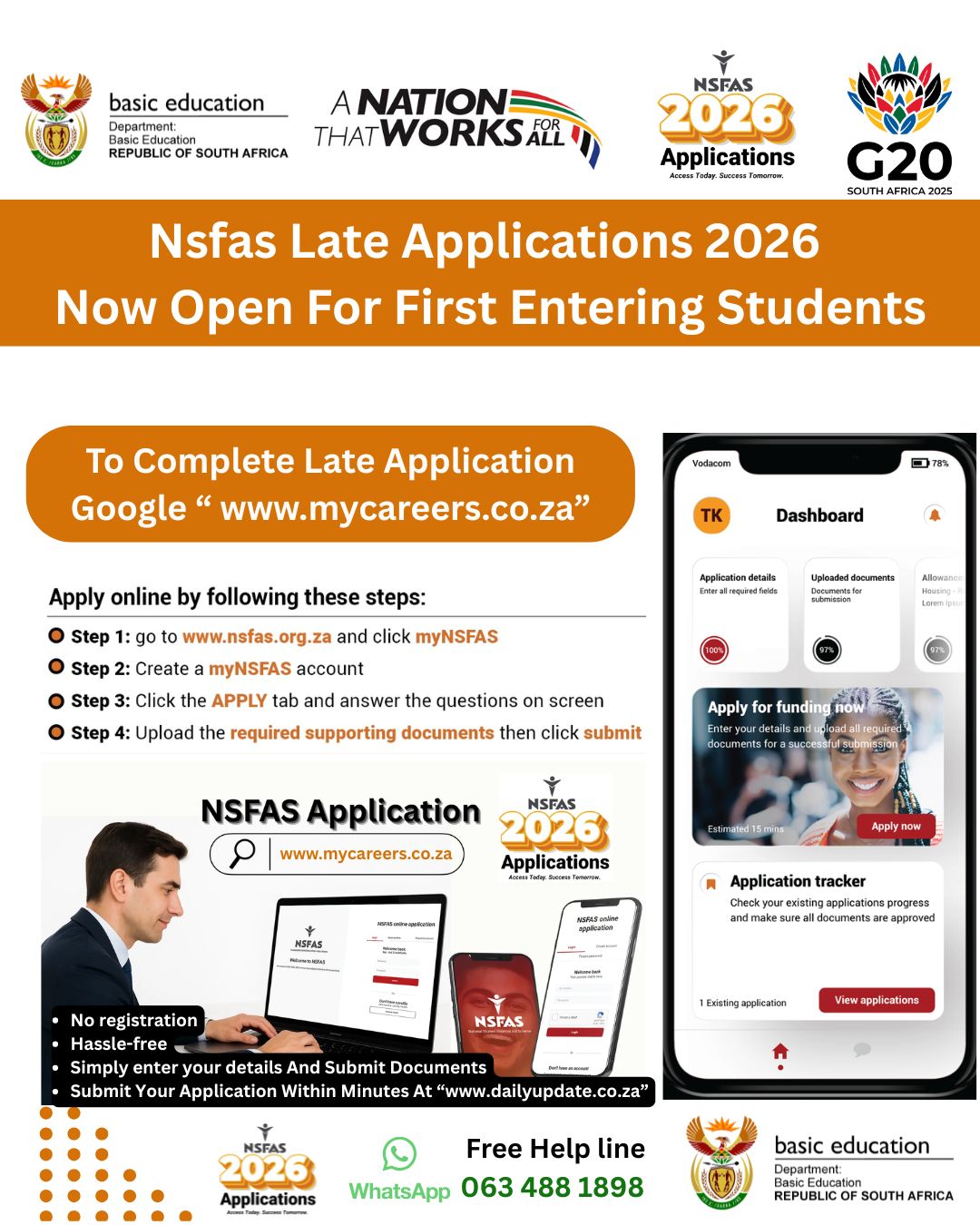
If you searched for “late NSFAS application”, you’re not alone. Many students only realize they missed the deadline after matric results, late acceptance letters, or because their application got stuck on “incomplete.”
The truth is: even if new applications are closed, there are still real steps you can take depending on your situation. This guide breaks down exactly what to do.
Step 1: Confirm Your NSFAS Status First (Most Important)
Before you do anything else, check what NSFAS says about your profile. Many students are not “late” — they are missing documents or must appeal.
Common statuses you might see:
- Application Submitted / In Review
- Incomplete / Outstanding Documents
- Provisionally Funded / Approved
- Rejected (Appeal Available)
- No Application Found
✅ Your next step depends on this.
Step 2: If You Missed the NSFAS Application Window (New Applications Closed)
If you didn’t apply at all and the applications are closed, you usually cannot submit a brand-new application immediately. But you still have strong options:
Option A: Focus on TVET Funding Routes
Many TVET colleges have different intake cycles (semester/trimester). If you are registering at a TVET college, you can often get assistance through:
- College financial aid office (NSFAS support desk)
- Assisted application or document submission processes
This is one of the best routes if you’re trying to secure funding when university applications are already closed.
Option B: Prepare for the Next NSFAS Cycle Early
Use this time to make sure you’re ready the minute applications open again:
- Fix any ID/Home Affairs issues
- Keep one active phone number (don’t change it often)
- Use one email address you can access
- Prepare documents and forms in advance (clear scans)
Step 3: If Your Application Is “Incomplete” (Late Documents)
This is the most common reason students believe they’re late.
What “Incomplete” usually means
NSFAS needs additional documents such as:
- Consent forms
- Declaration forms
- Proof documents depending on your family situation
How to fix it fast
- Log in to your NSFAS account
- Check exactly what document is missing
- Download the required form(s)
- Fill in correctly and sign where required
- Take a clear photo/scan (no blur, no cut-off corners)
- Upload and re-check your status
✅ Tip: Use good lighting and scan apps if needed so your uploads are readable.
Step 4: If You Were Rejected (Appeal = Your Second Chance)
If NSFAS rejected your application, your “late application” option is usually an appeal.
How to appeal correctly
- Log in to your NSFAS account
- Find the rejection reason
- Select Submit Appeal
- Upload documents that directly prove your case
Rejection reasons that appeals often fix:
- Wrong household income details
- Missing supporting documents
- Parent/guardian information issues
- System verification problems
✅ Tip: Appeals succeed when you upload the exact proof required for the rejection reason.
Step 5: Common Mistakes That Cause Late NSFAS Problems
Avoid these errors because they delay funding:
- Uploading blurred photos or screenshots
- Missing signatures on forms
- Uploading the wrong document type
- Using different phone numbers and emails repeatedly
- Not checking status often (you miss document requests)
Step 6: Late NSFAS Checklist (Quick)
Use this checklist to stay ready:
✅ South African ID number correct
✅ Active phone number + email address
✅ Clear scanned documents (PDF/JPG)
✅ Forms signed properly
✅ You know your application status
✅ You submitted outstanding documents or an appeal (if needed)
What To Do Right Now (Simple Summary)
- If you applied: check if you’re missing documents and upload them immediately.
- If you were rejected: submit an appeal with proper proof.
- If you never applied and it’s closed: consider TVET intake routes + prepare for the next cycle.